Ceramic coating for cars is a liquid polymer that bonds to your vehicle’s paint and creates a long-lasting protective layer. It blocks UV rays, repels water, and keeps paint looking fresh for years – something wax simply cannot do.
A Ford F-150 owner in Mississauga had his truck coated before winter hit. Road salt washed right off, he skipped two years of waxing, and the paint still looked clean come April.
What Is Ceramic Coating for Cars and How Does It Work?
Ceramic coating for cars chemically bonds to the paint rather than sitting on top like wax. Once cured, it becomes a hard, semi-permanent shield.
The coating is made from silicon dioxide (SiO2). It fills microscopic pores in the clear coat and creates a surface that water, dirt, and UV rays cannot easily get through. Paint stays cleaner longer and resists fading.
What Prep Work Does Ceramic Coating for Cars Require?
Surface preparation is the most important part of ceramic coating for a car. Skip it, and the coating will not bond – it will peel, streak, or trap contamination underneath.
The prep process includes:
- Wash the car with pH-neutral soap and a microfibre wash mitt
- Clean wheels and tires first – brake dust and iron must go before anything else
- Apply a fallout remover across all panels to dissolve embedded metal particles
- Run a clay bar across the paint to pull out any chemicals that were missed
- Polish with a dual-action polisher if swirl marks or water spots are present
- Wipe every panel with an IPA solution to remove all oil before coating
Even fingerprints on a panel cause the ceramic coating for cars to bond unevenly. The surface must be completely clean and oil-free.
How Do You Apply Ceramic Coating for Cars Step by Step?
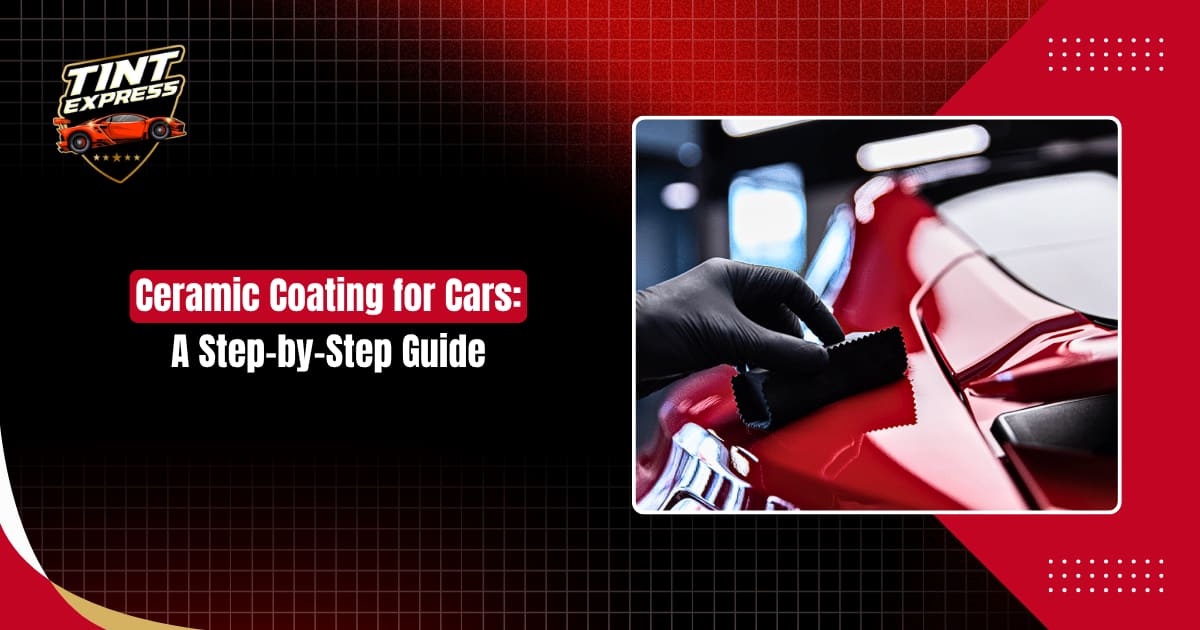
Ceramic coating goes on in thin, even layers using a microfibre applicator. Work one panel at a time and never rush.
Most detailers use the river method. Put a few drops on the applicator, spread across the panel in overlapping straight lines, then cross-hatch in the opposite direction. After the coating flashes – two to five minutes depending on temperature – buff it off with a clean microfibre towel and move to the next panel.
Most quality systems use two steps:
- Base coat: bonds to the clear coat and provides the main protection layer
- Topcoat: goes over the base and boosts the hydrophobic performance
Let each layer cure fully before applying the next. Rushing between coats causes streaks and high spots.
How Long Does Ceramic Coating for a car take to cure?
Ceramic coating for a car needs 24 to 48 hours before the vehicle can get wet. Full hardness takes around two to three weeks.
During the first 48 hours:
- Keep the car in a garage or covered area
- Do not wash it or let rain sit on the surface
- Avoid touching the paint with your bare hands
- Keep away from bird droppings and tree sap – both etch the coating before it hardens fully
Temperature also matters. Most coatings cure best between 10°C and 25°C. In colder parts of Canada, indoor application is the only reliable option.
Visit our Services Page to view all the automotive services we offer.
How Does Ceramic Coating for Cars Compare to Wax and Sealant?
Ceramic coating for a car outlasts both wax and paint sealant by a long stretch.
| Protection Type | Lasts | Hydrophobic | UV Protection | Cost |
| Carnauba wax | 4–8 weeks | Basic | Low | $20–$60 |
| Paint sealant | 3–6 months | Moderate | Moderate | $50–$150 |
| Ceramic coating | 2–5 years | Strong | High | $500–$2,000+ |
Wax washes away. Paint sealant breaks down with road exposure. Ceramic coating for cars bonds chemically to the clear coat and holds up through Canadian winters, salt, and UV.
How Do You Maintain Ceramic Coating for a Car After Application?
Maintaining ceramic coating for cars is straightforward. The coating does most of the work – your job is not to undo it.
Simple steps to follow:
- Wash with pH-neutral shampoo every two to three weeks
- Stay away from automatic car washes with stiff brushes – they cause micro-scratches
- Dry with a clean microfibre towel or a blower to stop water spots from forming
- Apply a ceramic spray booster every three to four months to keep the hydrophobic layer strong
Done right, ceramic coating for cars lasts two to five years through harsh Canadian weather.
Where Can You Get Ceramic Coating for Cars Done in Canada?
Tint Express provides professional ceramic coating for a car at studio locations across Mississauga, Scarborough, Waterloo, and Edmonton. Every job runs inside a climate-controlled shop – not a driveway or open garage.
Dust, humidity, and temperature all affect how ceramic coating bonds to paint. A controlled studio is what separates a coating that lasts years from one that starts lifting in months.
Book ceramic coating for cars at tintexpress or call +1 437-989-0776.
Frequently Asked Questions
Q1. How long does ceramic coating for cars last?
A professionally applied ceramic coating lasts two to five years, depending on the product used and ongoing maintenance.
Q2. Can ceramic coating for cars be done at home?
Yes, but prep work is critical. Poor decontamination or skipping paint correction means the coating will not bond correctly.
Q3. Does ceramic coating for cars remove scratches?
No. It protects against future light scratches but does not fix existing ones. Paint correction must happen before coating.
Q4. How much does ceramic coating for cars cost in Canada?
Professional applications range from $500 to $2,000 or more based on vehicle size and paint condition.
Q5. Can you apply wax over ceramic coating for cars?
Avoid traditional wax – it reduces hydrophobic performance. Use a ceramic spray booster to maintain the top layer instead.
Stay connected with us on Instagram and Facebook to see our recent work and updates.